
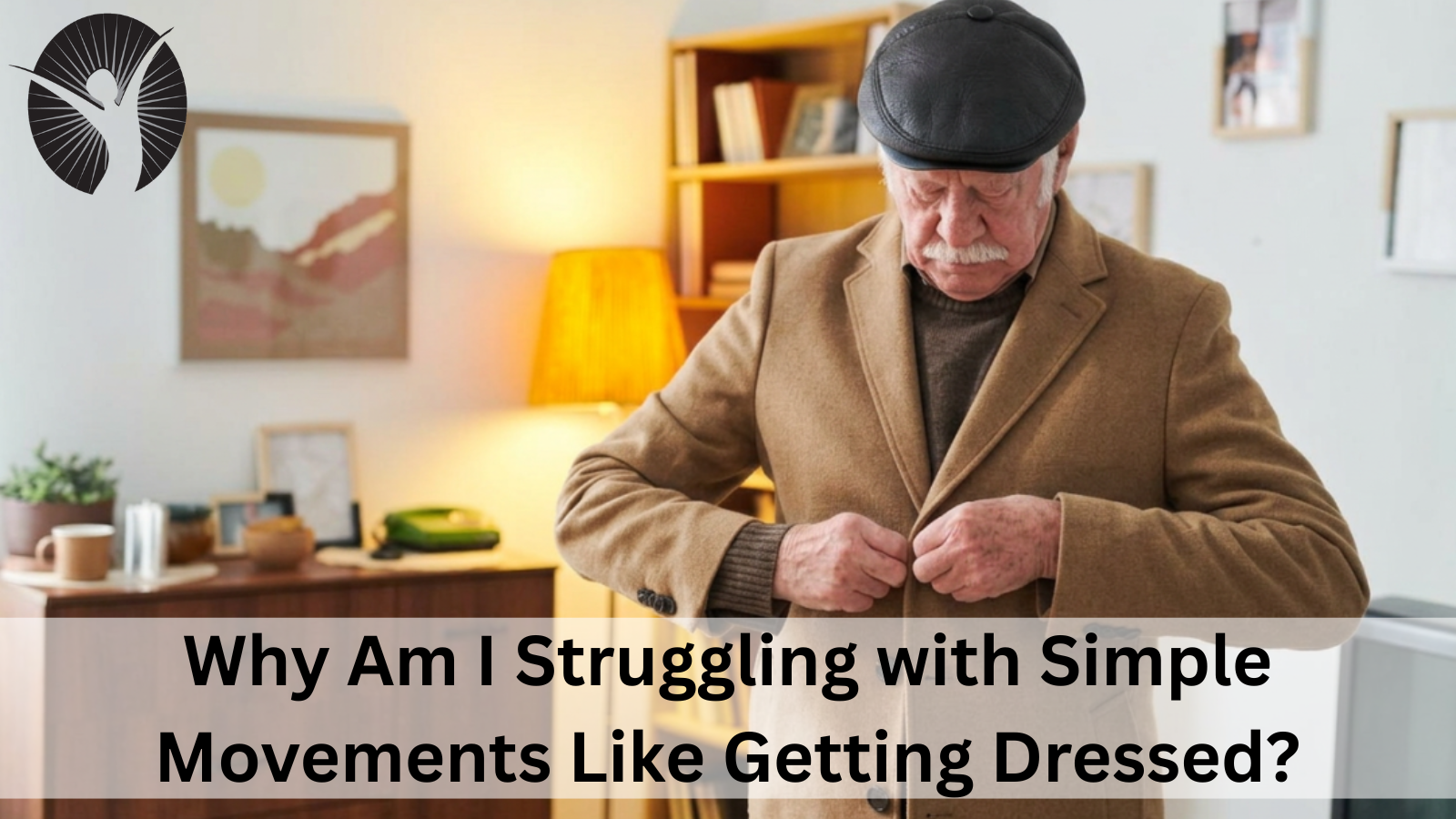
Why Am I Struggling with Simple Movements Like Getting Dressed?
September 18, 2026 | Live Your Life PT
Has Getting Dressed Started Feeling More Difficult?
Getting dressed is something most people do every day without giving it much thought. However, if buttoning a shirt, pulling on pants, fastening a bra, putting on socks, or tying shoes has become frustrating or exhausting, you may be wondering what has changed.
Many people assume these challenges are simply a normal part of getting older. In reality, difficulty with everyday movements often has an underlying cause that can be addressed.
The good news is that occupational therapy can help you regain confidence, improve function, and make daily routines easier.
What Is Happening?
Getting dressed requires much more than flexibility.
It depends on many body systems working together, including:
- Strength
- Balance
- Joint mobility
- Coordination
- Hand dexterity
- Vision
- Planning and sequencing movements
Changes in any of these areas can make once-simple tasks feel much more difficult.
These changes may develop because of:
- Arthritis
- Joint stiffness
- Muscle weakness
- Balance problems
- Neurological conditions
- Recovery after surgery or illness
- Reduced activity over time
Difficulty getting dressed is often one of the first signs that everyday function is becoming more challenging.
Why Does It Matter?
Getting dressed is more than just another daily task. It is an important part of living independently.
When dressing becomes difficult, many people begin to:
- Take much longer to get ready
- Avoid certain clothing
- Need help from a spouse or family member
- Feel frustrated or embarrassed
- Lose confidence in their abilities
Over time, these small challenges can affect overall quality of life. Addressing them early may help prevent additional limitations from developing and maintaining independence as you age.
What Can Help?
The first step is understanding why dressing has become difficult.
Occupational therapy focuses specifically on helping clients perform everyday activities more safely and efficiently.
An occupational therapist may:
- Teach easier ways to complete dressing tasks
- Recommend techniques that reduce strain
- Improve hand coordination and fine motor skills
- Practice real-life dressing activities
- Recommend adaptive equipment when appropriate
Examples of helpful dressing tools may include:
- Sock aids
- Long-handled shoehorns
- Dressing sticks
- Button hooks
- Elastic shoelaces
- Zipper pulls
These tools are designed to promote independence, not replace it. For many clients, combining movement training with practical strategies makes dressing easier and less stressful.
Why In-Home Therapy Makes a Difference
Getting dressed happens at home, not in a clinic.
That is why in-home occupational therapy can provide unique benefits.
Working in the client’s home allows the therapist to:
- Observe real dressing routines
- Identify movement challenges
- Recommend personalized solutions
- Practice techniques using the client’s own clothing and furniture
- Determine whether adaptive equipment may improve independence
Because therapy happens where daily life occurs, recommendations are practical and immediately useful.
Live Your Life provides mobile, in-home occupational therapy in Richfield, MN and surrounding Twin Cities communities, helping clients stay independent with everyday activities.
What Should You Do Next?
If getting dressed has become more difficult than it used to be, do not assume it is something you simply have to live with.
Consider scheduling an evaluation if you:
- Have difficulty putting on socks or shoes
- Struggle with buttons or zippers
- Feel unsteady while dressing
- Need help with clothing more often
- Avoid certain clothing because it is too difficult to put on
- Are searching for in-home physical therapy near me or occupational therapy at home
Early intervention may help you stay independent and continue managing daily routines with confidence.
FAQ
Is it normal to have trouble getting dressed as I age?
Some physical changes occur with age, but increasing difficulty with dressing is often related to strength, mobility, balance, or coordination that may improve with therapy.
Should I see a physical therapist or an occupational therapist?
Both may help. Physical therapy focuses on movement, strength, and balance, while occupational therapy focuses on improving everyday activities such as dressing, bathing, and grooming.
Do you come to my home?
Yes. Live Your Life provides mobile, in-home physical therapy and occupational therapy services.
Can adaptive equipment really help?
Yes. Many simple tools make dressing easier while allowing clients to remain as independent as possible.
What areas do you serve?
Live Your Life provides mobile, in-home therapy services in Richfield, MN and surrounding Twin Cities communities, with concierge services available in South Florida.
Taking the Next Step Towards Independence with Everyday Movement
Difficulty getting dressed can result from changes in strength, balance, mobility, coordination, or hand function. These changes may gradually affect independence and make everyday tasks more challenging.
In-home physical therapy and occupational therapy help improve movement, teach practical techniques, and recommend adaptive tools to make dressing easier and safer. Live Your Life provides mobile, in-home therapy services in Richfield, MN and surrounding Twin Cities communities to help clients maintain independence in their daily lives.
If getting dressed has become more difficult than it used to be, do not wait until you need help with every daily task.
Call today to schedule your in-home evaluation and let our physical and occupational therapists identify what is making dressing difficult and create a personalized plan to help you move more easily and stay independent. You can also visit our website to explore adaptive dressing aids and home health products designed to make everyday activities safer, simpler, and more comfortable.
Reference
Saito Y, Kikuchi Y, Sawada T, Tomori K. Occupational Therapy Intervention for Improvement of Activity and Participation in Home Rehabilitation for Community-Dwelling Older Adults: A Scoping Review. Am J Occup Ther. 2025;79(6):7906205070. doi:10.5014/ajot.2025.051190
What makes us different? Our care comes to you!
View Our Service AreaWe Are A Comprehensive Mobile Company Focused on Wellness, Fitness, Rehabilitation, and Prevention
We specialize in transforming the lives of seniors, adults and teenagers with a wide array of diagnoses and conditions in their home or location of choice. You deserve to be your best self through good health and wellness. We would love to have the privilege to work with you or a loved one.
Request a FREE Consultation Today!